Not All Casino Games Are Created Equal — Here's Where Your Money Actually Goes
Here's something the casino floor isn't exactly advertising on a neon sign: every single game in the building is designed so the house collects more than it pays out over time. That's not a conspiracy — it's just math. But what surprises most players is how wildly different that math looks from one game to the next.
Understanding the house edge isn't about being cynical. It's about being smart. And at Johnny Z's, smart is how you play.
So What Exactly Is the House Edge?
The house edge is the percentage of every dollar wagered that the casino expects to keep over the long run. Think of it as the price of admission for the entertainment. A 5% house edge means that for every $100 bet, the house expects to pocket $5 on average. The key phrase there is on average — in any single session, anything can happen. But the longer you play, the more the math catches up with you.
Here's the kicker: that percentage varies enormously depending on what you're playing. We're talking the difference between giving up loose change and handing over your wallet.
Slots: The Flashiest Drain on Your Budget
Slots are the undisputed kings of the casino floor — in terms of both popularity and how aggressively they chew through your money. Most modern slot machines carry a house edge somewhere between 2% and 15%, though many land-based machines in places like Las Vegas hover around 6–8%. Online slots can vary even more widely.
The problem isn't just the edge itself. It's the speed. Slots allow you to make hundreds of bets per hour, meaning even a modest house advantage compounds quickly. A 6% edge at 500 spins per hour on a $1 machine? You're theoretically burning through $30 an hour just to keep the lights on.
There's also the "near miss" illusion — those two cherries and a blank that make you feel like you almost won. Modern slots are programmed to show near misses more frequently than pure probability would produce. It's legal, it's widespread, and it keeps you pulling.
Bottom line: slots are fun, they're low-pressure, and they can absolutely pay out big. But they're not where disciplined players put their primary budget.
Roulette: Depends on Which Wheel You're Spinning
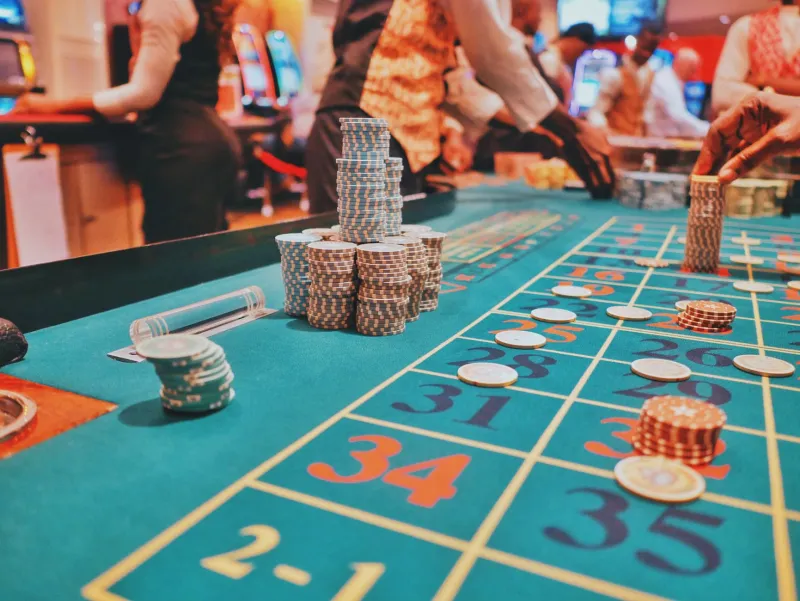
American roulette — the version with both a 0 and a 00 — carries a house edge of 5.26% on almost every bet on the table. That double zero is doing a lot of heavy lifting for the casino. European roulette, with just a single zero, cuts that edge nearly in half to 2.7%.
If you're playing roulette, this is one of the clearest "always choose the better version" situations in all of gambling. Seek out single-zero tables whenever possible, whether you're playing online or at a brick-and-mortar casino. The difference in your long-term results is real.
And let's put one myth to rest: betting systems like the Martingale (doubling your bet after every loss) don't change the house edge. They change your risk profile — dramatically — but the math underneath stays exactly the same.
Blackjack: The Smart Player's Best Friend
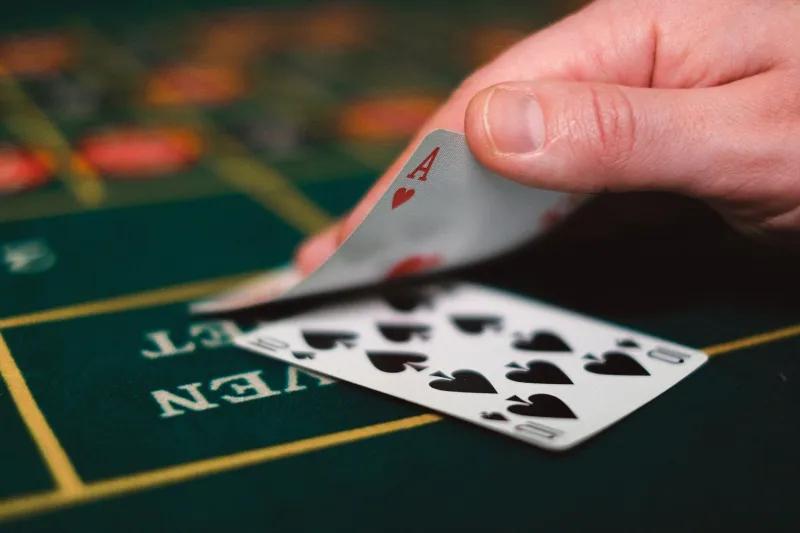
Here's where things get interesting. Blackjack, played with correct basic strategy, carries a house edge as low as 0.5% — sometimes even lower depending on the specific table rules. That's not a typo. Half a percent.
Basic strategy is a mathematically derived set of decisions — when to hit, stand, double down, or split — based on your hand and the dealer's upcard. It's not a secret. You can find basic strategy charts all over the internet, and many casinos will even let you reference one at the table. The house edge listed above assumes you're playing every hand correctly.
The catch is that most players don't use basic strategy. They go on gut feeling, superstition, or "hot streaks." That's when the house edge climbs back up toward 2–4%. The casino isn't worried about people knowing basic strategy exists — they're banking on the fact that most folks won't bother to learn it.
If you're going to invest time in any casino skill, basic blackjack strategy is the highest-ROI lesson you'll ever take.
Poker: A Different Animal Entirely
Poker deserves its own category because you're not playing against the house — you're playing against other people. The casino takes a small percentage of each pot (the "rake") or charges a time fee, but the outcome of the game is determined by the players themselves.
This means the house edge concept doesn't apply the same way. A skilled poker player can actually profit over time, which is essentially impossible in pure house-banked games like slots or roulette. That said, the rake still needs to be accounted for, and beating recreational players consistently requires genuine skill development.
Poker is the only casino game where your long-term results are primarily a function of your decisions, not just probability.
The Misconceptions Worth Dropping Right Now
"I'm due for a win." No, you're not. Each spin, hand, or roll is statistically independent. A slot machine that hasn't paid out in three hours isn't "hot" — it has no memory.
"The casino adjusts the odds based on how much I've won." Nope. The house edge is baked into the game mechanics, not managed by someone watching your session.
"I have a system that beats roulette." You don't. Systems manage your bets, not the underlying probabilities.
Play the Right Games for the Right Reasons
None of this means you should only play blackjack and never touch a slot machine. Entertainment value is real, and sometimes you just want to zone out with some spinning reels. But knowing the math means you can allocate your budget intentionally.
Want to stretch your session? Stick to low-edge games like blackjack or single-zero roulette. Want a shot at a life-changing jackpot? Slots deliver that, but understand you're paying a premium for the dream.
At Johnny Z's, we're not here to tell you how to have fun — we're here to make sure you're having it with your eyes open. The house always has an edge. The smart move is knowing exactly how big it is before you sit down.