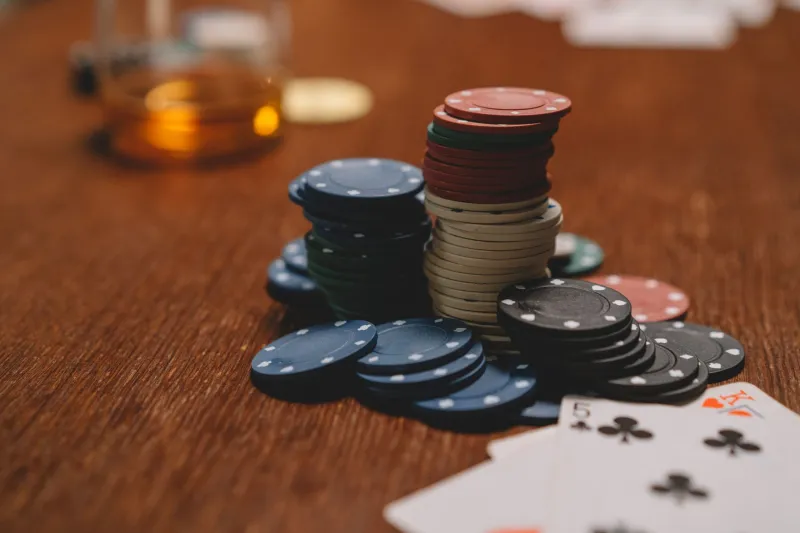
First Timer's Tax: How New Casinos Quietly Drain Players Who Don't Know the Layout

You've done Vegas before. You know how to play blackjack, you've got a bankroll plan, and you're not walking in blind. But this trip you're hitting a property you've never visited — maybe a new resort on the Strip, a regional casino in a state you're passing through, or a tribal property a friend recommended.
You sit down feeling confident. Two hours later, you're lighter than expected, and you can't quite explain why.
Welcome to what we at Johnny Z's call the First Timer's Tax. It's not a line item on your receipt, but it's real, it's consistent, and it hits almost every player who walks into an unfamiliar property without a plan.
What the First Timer's Tax Actually Is
The First Timer's Tax isn't one thing — it's a cluster of small disadvantages that stack up when you're navigating unfamiliar terrain. Individually, each one is minor. Together, they can meaningfully shift the outcome of your session.
Here's what's working against you the moment you walk through doors you've never opened before:
Cognitive load. Your brain is processing a new environment — where the games are, how the floor is organized, which tables have open seats, where the cage is, how the comp system works. That mental overhead isn't free. Research on cognitive bandwidth shows that people making decisions under higher mental load make worse choices. You're essentially playing distracted, even if you don't feel distracted.
Rule variation blindness. Blackjack rules vary more than most players realize. A single-deck game at one casino might pay 6:5 on blackjack instead of 3:2 — a change that nearly triples the house edge. Some casinos allow late surrender; others don't. Some craps tables have different field bet payouts. If you don't check the rules before you sit down, you're playing a game you haven't fully read the instructions to.
Layout disorientation. Casino floors are deliberately designed to be non-linear, confusing, and immersive. A property you know well becomes navigable through muscle memory. A new one requires active navigation — which means more time on the floor, more exposure to games you didn't plan to play, and more impulse decisions made while you're trying to find the bathroom.
Slower decision-making at the table. Even experienced players think a beat slower at unfamiliar tables. Where are the chips? How does this dealer run the game? What's the minimum? That hesitation is small, but it affects pacing and sometimes strategy.
The Rule Variation Problem Deserves Its Own Section
Seriously, this one is underestimated. Let's talk numbers.
A standard blackjack game with good rules — 3:2 payout, dealer stands on soft 17, double after split allowed — carries a house edge around 0.5% for a basic strategy player. Walk into a casino offering 6:5 blackjack (common on single-deck games in Vegas, especially at lower-limit tables) and that edge jumps to roughly 1.4%. That's nearly three times the disadvantage, and it's invisible unless you're looking for it.
Craps has similar landmines. The standard house edge on a pass line bet is about 1.41%, but some casinos quietly offer different odds multipliers — 2x, 3x, even 10x free odds — that dramatically affect your effective edge. If you're used to a 10x odds game and you sit down at a 2x odds table without noticing, your strategy is miscalibrated.
First-time visitors to a property almost never audit the rules before sitting down. That's the tax.
The Impulse Game Problem
Here's another First Timer's Tax mechanism that flies under the radar: unfamiliar floors lead to unplanned game selection.
When you're wandering a new casino looking for the games you came to play, you pass a lot of other games. Novelty is attractive. That three-card poker table you don't normally play looks interesting. The carnival game with the big jackpot display pulls your attention. The slot bank near the entrance catches you before you've even found the table games section.
Impulse play at games you haven't studied or practiced is almost always worse EV than your primary games. You're not just playing a game with a higher house edge — you're playing it without the strategy depth that comes from experience. Double disadvantage.
How to Shrink the Tax Before You Arrive
The good news is that the First Timer's Tax is largely a preparation problem, which means it's largely a solvable one. Here's the framework:
Research the property before you go. Most major casinos have websites that list their games and, sometimes, rule variations. Gambling forums — especially communities dedicated to advantage play — often have detailed breakdowns of specific properties' rule sets. Spend 20 minutes before your trip and you'll walk in knowing what to look for.
Find the floor map. Many large casino resorts publish or post floor layouts. Even a rough sense of where the table games, cage, and exits are reduces cognitive load significantly. You're not navigating blind — you have a mental map to fall back on.
Identify your target games in advance. Decide what you're playing before you walk in. Not "I'll see what looks good" — a specific decision. This protects you from impulse game selection and keeps you focused.
Arrive early and do a lap before you play. Give yourself 10-15 minutes to walk the floor without betting. Find your games, check the minimums, look at the rule placards on the tables, get your bearings. You'll sit down with far less cognitive overhead than the player who walked straight from the entrance to the nearest open seat.
Check the rule placards before you sit. Blackjack tables are required to post their rules. Look for the payout on natural blackjack (you want 3:2), whether the dealer hits or stands on soft 17 (stand is better for the player), and whether doubling after splits is allowed. Takes thirty seconds and can save you real money.
The Mindset Shift
The deeper fix for the First Timer's Tax is treating a new casino visit like a new environment that requires a brief orientation period — not as a place where your existing skills automatically translate at full efficiency.
Your blackjack strategy doesn't change. Your bankroll management doesn't change. But your awareness of the environment, the specific rules in play, and the cognitive demands of navigating unfamiliar space should all factor into how you approach the first hour.
Slow down. Scout before you spend. Check the rules. And don't let the novelty of a new property talk you into games you didn't come to play.
The casino is always ready for you on day one. Make sure you're ready for it.