Don't Be That Guy: The Real Rules of Casino Table Etiquette
Casinos have their own culture, and table games sit at the center of it. Whether you're pulling up a stool at a blackjack table in Vegas or joining a poker game at your local card room, there's a whole layer of unspoken rules operating beneath the surface. Regulars know them instinctively. Newcomers learn them the hard way — usually through a sharp look from the dealer or an irritated groan from the guy next to them.
Nobody wants to be that player. So let's fix that before it happens.
General Table Rules That Apply Everywhere
Before we break things down by game, there are a few universal courtesies that every table player should internalize from day one.
Tip your dealer. This isn't optional in American casino culture — it's expected. Dealers work for tips, much like servers at a restaurant. You don't have to tip on every hand, but tossing a chip their way after a nice win or at the end of a session is standard practice. It also tends to make the experience more enjoyable for everyone at the table.
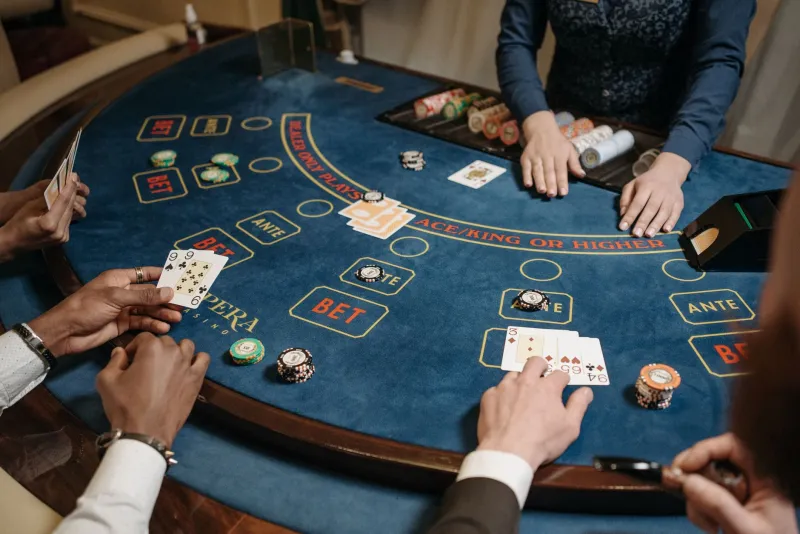
Don't touch your chips once bets are placed. This is a cardinal rule. Once the hand or spin is in motion, your bet is locked in. Reaching for your chips after the action starts — even to adjust them — looks like you're trying to add to a winning bet or pull back from a losing one. Dealers will stop you, and other players will notice.
Put your phone away. Or at least keep it below the table and on silent. Holding your phone over the table, taking photos of cards, or taking calls mid-hand is considered rude at best and suspicious at worst. Most casinos also prohibit photographing the table for security reasons.
Know when it's your turn. Pay attention to the flow of the game. Slowing things down because you're distracted or still deciding when the action reaches you is one of the fastest ways to annoy everyone around you.
Blackjack: Hand Signals Are the Language
Blackjack has some of the most specific etiquette of any casino game, and most of it comes down to hand signals. Because games are recorded on camera, verbal decisions alone aren't accepted at most tables. You need to signal your intent physically.
- Hit: Tap the table lightly with your finger.
- Stand: Wave your hand horizontally over your cards, palm down.
- Double down or split: Place your additional chips next to your original bet, not on top of it. Stacking on top can look like you're trying to change your original wager.
Don't touch your cards in a face-up game. In single-deck face-down games, you can pick up your cards — but use one hand only, and keep them over the table.
Also, resist the urge to coach other players on their decisions. Even if the guy next to you is hitting 17, that's his call. Unsolicited blackjack advice is a quick way to make enemies. If he takes the card you "needed," that's not actually how probability works — but try telling that to the rest of the table after a bad beat.
Craps: High Energy, High Protocol
Craps is the loudest, most social game on the floor — and it has some of the most specific rules around how you handle the dice.
Keep the dice visible. When you're the shooter, use one hand only, and never take the dice below the level of the table. This is a security measure, and the dealers will remind you if you forget. Keep your toss controlled — you want the dice to hit the back wall, but you don't need to spike them like you just scored a touchdown.
Don't hand the dealer money. At craps (and most table games), you don't hand cash directly to the dealer. Place it on the table and announce what you want. The dealer picks it up, counts it out, and gives you chips.
Mind the stick. When the stickman is pushing dice toward the shooter, keep your hands out of the way. A bet placed at the wrong moment can cause all sorts of chaos — and if the dice hit your hand mid-roll, you'll hear about it from every superstitious player at the table (which is most of them).
Speak up clearly when placing bets, and don't reach across other players' stacks. Craps tables are crowded; spatial awareness matters.
Roulette: Slow Down and Color Up
Roulette is a more relaxed game, but it has its own set of norms worth knowing.
Each player at a roulette table gets chips in a distinct color — that's intentional, so the dealer can track who bet what. Don't mix your chips with other players' stacks, and don't place bets after the dealer announces "no more bets." Reaching across the table after that call is a quick way to get your bet rejected and your reputation dinged.
When you're ready to leave, ask the dealer to "color up" — they'll exchange your roulette chips for standard casino chips you can take to the cashier. You can't cash colored roulette chips at the cage directly.
Poker: The Table Has Its Own Constitution
Poker is where etiquette gets the most complex — and the most serious. Unlike other table games where you're playing against the house, poker puts you against other players. Their experience at the table directly affects yours, so the social contract runs deeper.
Act in turn. Folding, calling, or raising before the action reaches you gives information to other players unfairly. Even if you know you're folding, wait until it's your spot.
Don't discuss your hand while the action is live. Even if you've folded, commenting on what you had or what you think someone else has can influence the outcome. This is called "talking about dead cards," and it's frowned upon everywhere from home games to the WSOP.
Keep your cards on the table and visible. Lifting them off the felt or covering them completely can get them killed (mucked) by the dealer. Use a card protector if you want to guard them — a chip placed on top works fine.
Don't slow-roll. If you know you have the winning hand at showdown, flip your cards over. Deliberately stalling before revealing a monster is considered one of the rudest moves in poker culture. You might get a laugh from your crew at home, but at a casino table it's a fast way to make the whole room dislike you.
And finally — tip the dealer when you win a pot. In poker, this is especially important since dealers rotate and their livelihood depends on it. A dollar or two on a medium pot, a bit more on a big one. It's the right move.
Own the Table
Knowing these rules doesn't just keep you out of trouble — it signals to everyone around you that you know what you're doing. Confidence at a casino table isn't just about your strategy. It's about moving correctly, respecting the game, and letting your competence show without saying a word.
That's the kind of player Johnny Z's is all about. Now go take your seat.