Why Your Casino Budget Evaporates — And the System That Actually Keeps It Intact
You set a limit. You were serious about it. Maybe you even said it out loud on the drive over. And then, somewhere between the second free drink and the fourth spin of a slot machine that felt this close to hitting, the number in your wallet stopped meaning anything.
This isn't a story about weakness. It's a story about design — and a little bit about the way the human brain betrays itself under pressure. At Johnny Z's, we believe playing smart is just as important as playing at all. So let's get into the real reasons casino budgets fail, and more importantly, what you can actually do about it.
The Budget Isn't the Problem — the Plan Is
Here's a truth most gambling advice skips over: having a budget and having a strategy are two completely different things. A budget is just a number. A strategy is a set of rules that governs how you behave when that number starts shrinking.
Most players operate on budget alone. They decide on, say, $200 for the night, and that's the extent of their preparation. What they haven't figured out is what they'll do when they're down $150 in the first hour, or up $300 and feeling invincible. Without a plan for both scenarios, the number you started with is basically just a suggestion.
Behavioral economists call this the planning fallacy — the tendency to underestimate how difficult it will be to stick to a decision when emotions get involved. In a casino environment, emotions get involved immediately.
Sunk Cost and the Point of No Return
Let's talk about the sunk-cost fallacy, because it is absolutely devastating to casino bankrolls across America every single weekend.
The logic goes like this: you're down $80. Walking away feels like accepting that loss, making it real and final. But if you keep playing, there's still a chance to get it back. So you keep playing. Then you're down $120. Same logic applies. Then $180. And so on.
Rationally, the money you've already lost has no bearing on your odds going forward. The roulette wheel doesn't know — or care — that you're in a hole. But our brains are wired to hate losses more than we love equivalent gains, a phenomenon psychologist Daniel Kahneman called loss aversion. Casinos don't create this bias, but they absolutely benefit from it.
The fix is to mentally write off your session budget the moment you walk in. That $200 is already spent — you're just exchanging it for entertainment. When that mental shift happens, chasing losses starts to feel as absurd as it actually is.
How the House Nudges Your Spending
Casinos are not passive environments. Every element — from the absence of clocks to the maze-like layout to the complimentary drinks — is engineered to extend your session and loosen your grip on your money. This isn't a conspiracy theory; it's documented hospitality and design strategy.
A few of the sneakiest mechanisms:
Chips and credits over cash. When you're playing with chips or digital credits rather than physical bills, spending feels abstract. Handing over a $25 chip hurts less than peeling a twenty and a five from your wallet. Online platforms use this same psychology with balance displays instead of dollar-denominated prompts.
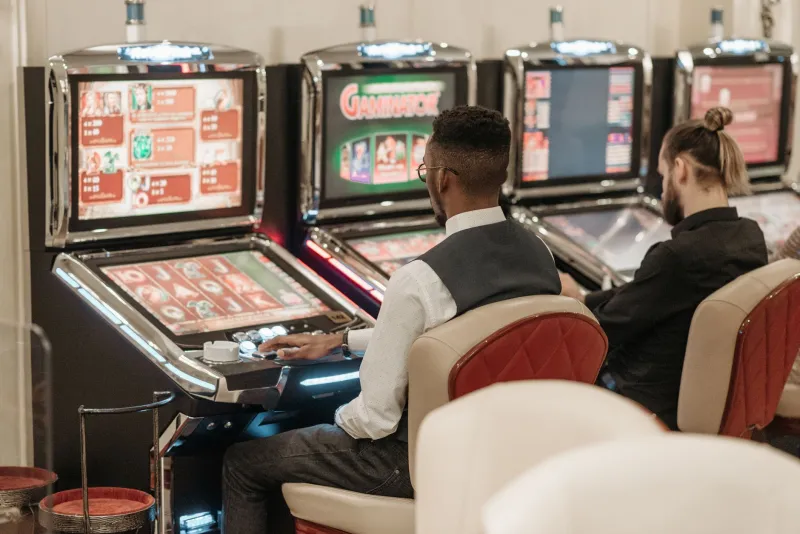
Near-misses. Slot machines are legally and mathematically calibrated to produce near-miss outcomes at a higher rate than pure chance would generate. That "almost" feeling triggers the same reward circuitry as a win, keeping you engaged and spending.
The free drink economy. Complimentary alcohol is not generosity — it's an investment. Even marginal impairment to judgment is worth far more to a casino than the cost of a well drink. If you're playing with real money, staying sharp isn't a lifestyle choice; it's a strategic one.
Knowing these mechanics won't make you immune to them. But awareness creates a small but meaningful gap between impulse and action — and that gap is where smart decisions live.
Building a Bankroll Framework That Actually Holds
Here's a practical system that goes beyond "just set a limit." It's built on three components: segmentation, rules, and exits.
Segmentation means dividing your session budget into smaller units before you start. If you're bringing $200, break it into four $50 blocks. You can only spend one block per hour, or per game type, or per table. This pacing mechanism slows the bleed and gives you natural check-in points to assess how you're feeling and whether you want to continue.
Rules are pre-committed decisions you make before your emotions are involved. Examples: "If I double my starting stack, I pocket the original buy-in and play only with profit." Or: "I never re-buy more than once in a session." Write these down if you need to. The key is that you're making these calls from a calm, rational state — not from the table.
Exits are predetermined stopping conditions — both on the downside and the upside. Most players set a loss limit (even if they don't honor it). Far fewer set a win limit. But walking away up $300 on a Tuesday night beats handing it all back because you felt like the momentum was on your side. Set a win target. Honor it. This is genuinely hard, and genuinely worth it.
The Mindset Shift That Changes Everything
There's a player archetype that consistently comes out ahead over time — not because they win more hands or hit more jackpots, but because they treat every session as a managed experience rather than a chase.
They're not emotionally attached to any single outcome. They know that variance is real, that bad nights happen to disciplined players, and that the goal isn't to win tonight — it's to stay in the game long enough for skill and smart play to compound over time.
This is easier said than internalized, especially when you're sitting at a blackjack table and the cards have been cold for forty minutes. But players who've made this shift describe it as genuinely liberating. The game becomes fun again when you're not riding every hand like your mood depends on it.
One More Thing Before You Head Out
If your budget has failed you in the past, don't be too hard on yourself. You were playing against a system specifically designed to make budgets fail. The casino's edge is real, but it's not insurmountable — not if you walk in with a framework instead of just a number.
At Johnny Z's, we're here for the players who want to do more than just show up and hope. Build the system. Know the traps. Play smarter. The house has an edge — but it doesn't have to have yours.