Betting With the Crew: Why Your Gambling Squad Might Be Your Biggest Liability
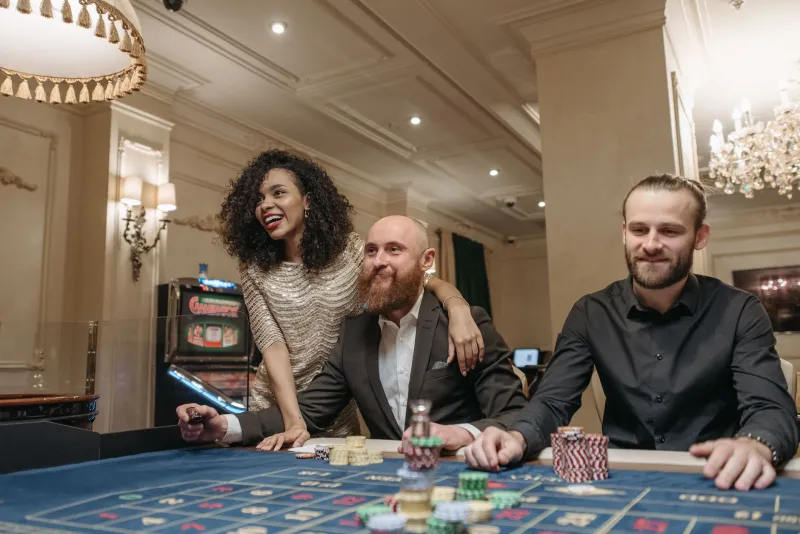
There's nothing quite like a casino trip with your crew. The energy is different. Everything feels bigger — the wins, the near-misses, the stories you'll be telling for the next three years. Gambling with friends is genuinely one of the more fun things you can do in a casino setting.
It's also, from a pure bankroll management standpoint, one of the riskier ones.
That's not an argument for going solo every time. But it is an honest look at the ways social dynamics mess with your financial discipline — often without you even noticing. Understanding the mechanics helps you enjoy the group experience without letting it quietly drain your wallet.
The Peer Pressure You Don't Recognize as Peer Pressure
When you're at a table alone, every decision is yours. When you're with friends, that changes in subtle but significant ways. Nobody has to say "come on, keep playing" for the pressure to exist. The simple fact that your group is still at the table creates a social pull that's hard to resist.
Behavioral economists call this conformity bias — the tendency to align your behavior with the people around you, especially in ambiguous situations. Gambling is inherently ambiguous (should I stay or go? should I raise or fold?), which makes it a perfect environment for this effect to run wild.
You were planning to quit after losing $150. But your buddy is up big and showing no signs of leaving. Another friend just sat down at a new slot bank. Walking away now feels like abandoning the group — even if nobody would actually care. So you buy in again. And again. And the session that was supposed to end at 9 p.m. is still going at midnight.
That's peer pressure. It just doesn't feel like it because nobody said a word.
The False Confidence Problem
Group settings also generate something that looks like confidence but functions more like recklessness. When you're surrounded by people having a good time, cheering each other's wins, and collectively riding the energy of the floor, your personal risk tolerance expands.
This isn't entirely irrational — shared experiences do reduce the emotional weight of individual losses. But in gambling, that emotional buffering works against you. Loss aversion is one of the few psychological instincts that actually helps you at the casino. It's the thing that makes you get up and walk away when you're down $200 instead of doubling up to chase it back. When your crew is around, that instinct gets muted.
You're less afraid of losing because it doesn't feel as lonely. And a gambler who isn't afraid of losing enough is a gambler who loses more.
The Spotlight Effect at the Table
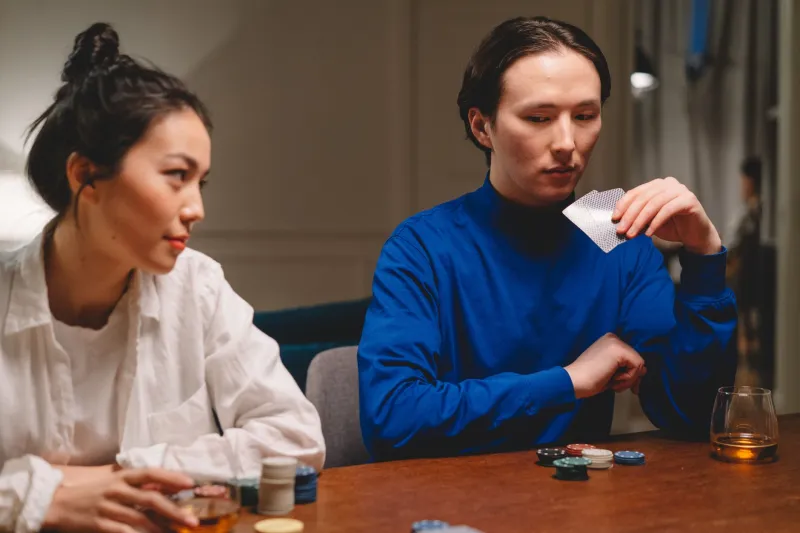
Poker is where group dynamics get especially complicated. If you're playing in a home game or at a casino table with friends, there's a performance element that doesn't exist when you're playing strangers. You want to look sharp. You want to make the bold call, pull off the bluff, be the one who read the situation correctly.
That desire to perform — to be the guy who made the right move — pushes you toward hero plays that solid strategy wouldn't support. You call with weaker holdings than you should because folding feels like admitting weakness in front of people who know you. You bluff in spots that don't make sense because the story of the bluff sounds good afterward.
Professional poker players will tell you that ego is one of the most expensive things you can bring to a table. Playing with friends turns the ego dial up several notches.
When the Group Dynamic Actually Works in Your Favor
To be fair, gambling with friends isn't all liability. There are real advantages — you just have to be intentional about capturing them.
Accountability, if you set it up right. A group of disciplined players can actually reinforce each other's limits. If you and your friends agree on session limits before you hit the floor and actually hold each other to them, the social dynamic works for you. The trick is having that conversation explicitly, before anyone has a drink in their hand and before the floor energy takes over.
Game selection pooling. Groups often have better collective knowledge than any individual member. If one person in your crew knows craps strategy cold and another is solid at blackjack, you can steer the group toward better-value games. The social cover of "we're all doing this" also makes it easier to leave a bad table without feeling like you're the killjoy.
Shared entertainment value. This one's real and shouldn't be dismissed. If your goal is a fun night out with people you like, the social experience has genuine value that offsets some of the financial risk. The math changes when you factor in enjoyment. A $200 loss that came with hours of laughs and memories is a different transaction than a $200 loss grinding alone at a video poker machine.
Practical Rules for Protecting Yourself in a Group Setting
Set your limit before you leave the house. Not in the parking lot. Not at the ATM. Before you go. Tell yourself — and ideally your crew — what you're willing to lose and stick to it regardless of what everyone else is doing.
Keep your bankroll physically separate. Don't share chips, don't spot each other money, and don't treat your friend's winnings as an extension of your own session. Blurred financial lines in group gambling almost always lead to one person subsidizing another's losses.
Give yourself permission to leave early. You don't have to stay until the group is done. Seriously. Cash out, watch from the rail, hit the bar, go find the good slot machines. A true crew doesn't require you to burn through your bankroll to prove you're having fun.
Separate the poker table from the friendship. If you're playing poker with friends, make a deal with yourself that the game is the game. Play your actual strategy, not the strategy that makes you look good. Your friends will respect solid play more than a flashy bluff that cost you a hundred bucks.
Solo vs. Squad: The Bottom Line
Solo play gives you cleaner decisions, lower social pressure, and a better chance of sticking to your plan. Group play gives you better energy, more fun, and — if you're lucky — a shared accountability system that actually works.
Neither is inherently superior. But knowing which mode you're in, and what each one costs you, puts you in a position to make smarter choices either way. The goal isn't to stop having fun with your crew. It's to stop letting the crew's energy quietly pick your pocket while you're busy enjoying yourself.
Play smart. Even when you're playing with company.