Your Brain After Midnight: The Hidden Cost of Playing When You're Running on Empty
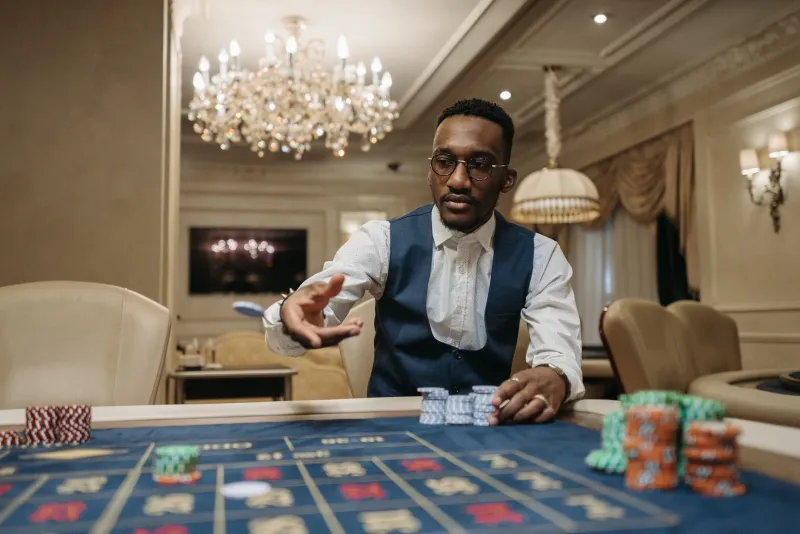
There's something seductive about a casino at 2 a.m. The crowd thins out, the energy shifts, and it feels like the whole floor belongs to you. Maybe the table's been cold all night and you're convinced a hot streak is overdue. Maybe you've been nursing a drink and waiting for your luck to turn. Whatever the reason, you're still there — and that's exactly where the house wants you.
Because here's what most players never stop to consider: the time you choose to gamble matters almost as much as the game you sit down to play.
What Sleep Deprivation Actually Does to Your Decision-Making
Let's get into the science for a second, because it's genuinely wild how much a tired brain changes the way you bet.
Researchers at Duke University found that sleep deprivation doesn't just make you sluggish — it fundamentally shifts how your brain processes risk and reward. Specifically, a fatigued brain becomes more sensitive to potential gains and less sensitive to potential losses. In plain English: you start chasing wins harder and stop caring as much about what you're losing to get there.
The prefrontal cortex — the part of your brain responsible for impulse control, rational thinking, and long-term planning — is one of the first regions to take a hit when you're tired. Meanwhile, the limbic system, which drives emotional responses and short-term reward-seeking, keeps humming along just fine. The result is a brain that's wired to take bigger swings and ignore the warning signs that would normally pump the brakes.
For a poker player, that means calling raises you'd fold cold sober. For a slots player, it means extending a session that common sense would've ended an hour ago. For a blackjack player, it means deviating from basic strategy because a hunch feels more compelling than math.
The Clock on the Wall Isn't Just Decoration
Casinos have long understood what chronobiology researchers are only now quantifying in academic papers: your circadian rhythm — the internal 24-hour clock that regulates alertness, mood, and cognitive function — creates predictable windows of vulnerability.
For most adults operating on a typical schedule, cognitive performance peaks in the late morning and again in the early afternoon. Decision-making quality starts declining in the mid-to-late evening and hits its lowest point between 1 a.m. and 4 a.m., a stretch sometimes called the "trough" in sleep science literature.
This isn't a small dip. Studies tracking reaction time, working memory, and judgment under pressure have found performance drops during this window that are comparable to being legally drunk. And unlike alcohol, fatigue doesn't come with the same social cues — you don't feel impaired the way you do after a few drinks. You just feel like you're playing on instinct, which sounds cool until you realize your instincts are being run by a half-asleep brain.
Industry Patterns: When Players Lose the Most
Casino operators track everything — bet sizes, session lengths, win/loss patterns — and the data tells a consistent story. Players logging sessions between midnight and 4 a.m. tend to show higher average bet sizes, longer session durations, and worse outcomes compared to players at the same games during daytime hours.
This isn't because the machines pay out differently at night or because dealers shuffle differently. The games are mathematically identical around the clock. What changes is the player sitting in the seat.
Late-night gamblers are more likely to:
- Increase bet sizes after a losing streak (classic tilt behavior)
- Skip meals and hydration, compounding cognitive decline
- Lose track of time and session length
- Ignore pre-set loss limits they established earlier
- Make side bets and prop bets they'd normally avoid
Casinos aren't stupid. The ambient lighting stays warm and consistent. The clocks stay off the walls. The cocktail service doesn't stop. Every element of the environment is calibrated to keep you comfortable while your internal alarm system quietly goes offline.
Fatigue and the Tilt Connection
If you've spent any time at a poker table, you know what tilt looks like. What's less obvious is that exhaustion is one of the fastest ways to get there — and one of the hardest to recognize in yourself.
Emotional regulation tanks when you're tired. Small frustrations feel bigger. Bad beats sting longer. The gap between "I should probably call it a night" and "one more hand" gets easier to cross because the mental friction that normally stops you has been worn down over hours of play.
This is the fatigue-tilt loop, and it's genuinely expensive. You don't have to be visibly angry or shaking with frustration to be playing on tilt. Sometimes it just looks like calling a little looser, bluffing a little more, and slowly leaking chips in a way you won't fully understand until you review the session the next morning.
Playing at Your Cognitive Peak: A Practical Framework
So what's the move? You don't have to become a 10 a.m. slots player to protect your bankroll. But a few adjustments can make a meaningful difference:
Set a hard session curfew before you sit down. Decide in advance — not in the moment — when you're walking away. Write it down if you have to. The version of you that's fully rested and thinking clearly makes better rules than the version of you at hour five of a session.
Track your session start time. Most players have a rough sense of how long they've been playing, but "a few hours" has a funny way of becoming four or five when you're not watching. A simple phone timer or note in your pocket works fine.
Treat your peak hours like a resource. If you know your sharpest window is 11 a.m. to 2 p.m., consider saving your higher-stakes play for that window. Reserve late-night sessions for lower-stakes, lower-pressure games where the cost of a foggy decision is smaller.
Build in mandatory breaks. Every 90 minutes, step away. Get some water, walk around, get some air if you can. It won't fully reset a tired brain, but it gives your prefrontal cortex a chance to catch up before you make your next decision.
Know your personal warning signs. For some players it's getting irritable. For others it's starting to root for specific symbols on a slot machine like they can influence the outcome. Figure out what your fatigue tells look like and treat them as exit signals.
The Bottom Line
The house edge is baked into every game on the floor — you already know that. But the edge the casino gets from a tired, time-disoriented player is something different entirely. It's not in the math. It's in you.
Playing smart means knowing the game. But it also means knowing yourself — including what version of yourself shows up at midnight versus noon. Johnny Z will always keep the lights on, but that doesn't mean you have to keep playing under them.
Protect your brain like you protect your bankroll. Because right now, one of them might be a bigger leak than the other.