Chasing Ghosts: The Truth About Hot Tables, Cold Tables, and the Streaks That Aren't Really There
That Table Looks Lucky. Your Brain Is Lying to You.
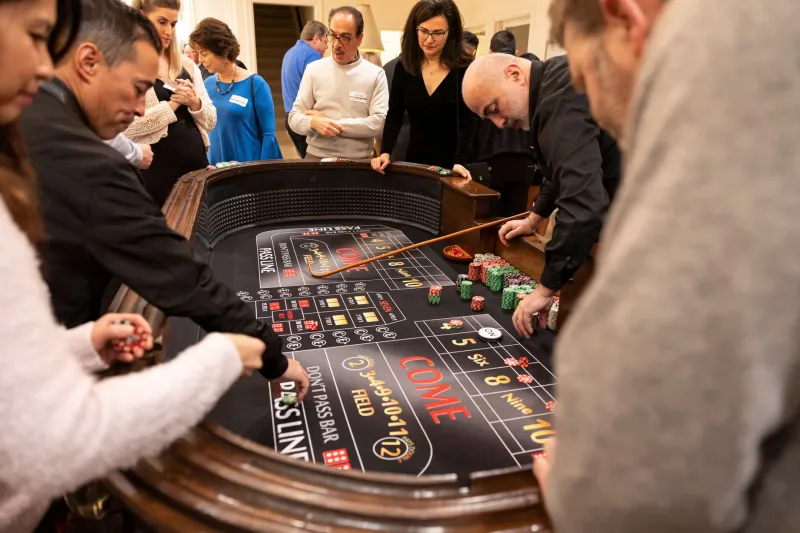
You've seen it happen. You're wandering the casino floor, maybe down a few bucks, and you spot a craps table where the whole crowd is going nuts. Chips are flying, people are high-fiving, and some guy in a Hawaiian shirt is on his sixth consecutive pass line win. Something in your gut says: get in on that.
That feeling is completely natural. It's also completely wrong.
The idea of a "hot table" — a game that's somehow on a winning streak, radiating good fortune to anyone lucky enough to sit down — is one of the most deeply embedded myths in all of gambling. Casinos know it. Mathematicians know it. And yet the belief persists, table after table, night after night, because the human brain is genuinely bad at understanding randomness. Worse, the casino environment is specifically designed to make you even worse at it.
Let's break down what's actually going on.
What Randomness Actually Looks Like
Here's the uncomfortable truth about games of pure chance: they don't have memory. A roulette wheel doesn't know it just landed on red five times in a row. A pair of dice has no idea they've been rolling sevens all night. Each outcome is statistically independent from every single outcome that came before it.
This concept — called independent trials in probability — is the foundation of how casino table games work. The odds on a standard American roulette wheel are the same on spin number one as they are on spin number five hundred. Always 5.26% house edge, every single time, no exceptions.
So when you see a roulette table that's hit black eight times straight, you're not watching momentum build. You're watching a perfectly normal statistical event that feels extraordinary because your brain is wired to find patterns. In reality, the probability of the next spin landing on black is still just under 47%. The streak means nothing.
This is sometimes called the Gambler's Fallacy — the mistaken belief that past results influence future outcomes in a random system. It's one of the most well-documented cognitive errors in psychology, and casino floors are basically a live laboratory for watching it happen in real time.
Why Your Brain Can't Help Itself
Blaming yourself for falling for this would be unfair. Pattern recognition isn't a flaw — it's one of humanity's greatest survival tools. For most of human history, noticing patterns kept people alive. If berries from a certain bush made people sick three times in a row, learning from that pattern was genuinely useful.
The problem is that this same mental hardware gets applied to situations where patterns don't exist. Researchers call this apophenia — the tendency to perceive meaningful connections between unrelated things. You see a streak at a blackjack table and your brain files it under "pattern detected" before you've even consciously processed what you're looking at.
Casinos are also loud, visually stimulating, and emotionally charged environments. When you're excited, tired, or a little bit buzzed on free drinks, your critical thinking takes a backseat. The part of your brain that does rigorous probability analysis is not the part running the show at 1 a.m. on the casino floor.
The House Knows Exactly What It's Doing
Here's where things get interesting: casinos don't just benefit passively from your belief in hot tables. In many ways, the entire physical and social design of a casino floor actively cultivates it.
Think about the layout. Winning tables are loud. Dealers call out big wins. Slot machines light up and play celebratory sounds even for small payouts. Pit bosses don't rush over to quiet things down when a table goes on a run — that energy draws in more players. The house wants you to see that Hawaiian-shirt guy raking in chips, because it pulls you and your bankroll right over to that table.
Chip design plays a role too. Casinos use chips instead of cash partly because it psychologically distances you from real money — but it also makes wins more visible. A big stack of chips is a visual signal that screams "winning is happening here." You're not just imagining the excitement; you're being shown it on purpose.
And of course, the casino's math works just fine whether you're at a hot table or a cold one. The house edge doesn't take a day off because some players got lucky for an hour. The longer you play, the more the math asserts itself. Every player who sits down chasing a streak is just another opportunity for the house edge to do its thing.
Streak-Chasing Strategies: Why They Fall Apart
Streak-based betting systems have been around for centuries. The Martingale — doubling your bet after every loss to eventually recoup — is probably the most famous. Hot-table chasing is a variation on the same flawed logic: if something has been going well, ride it until it turns.
The problem is that no betting system can change the underlying math of the game. Doubling your bets after losses doesn't improve your odds; it just means you lose bigger when the inevitable cold run hits. And chasing a hot table doesn't give you access to better odds — it just means you're playing with inflated confidence that the math doesn't support.
There's also a selection bias issue at play. You remember the times you jumped on a hot table and kept winning. You don't weight that memory against all the times you jumped on a hot table and it went cold immediately — because those memories don't feel as significant. The wins confirm your belief; the losses get filed away as bad luck.
How to Actually Use This at the Table
So does all of this mean you should ignore table energy entirely? Not necessarily — there are legitimate reasons to choose one table over another that have nothing to do with streaks.
Choose tables based on rules, not runs. In blackjack, for instance, table rules vary significantly. A game that pays 3:2 on a natural blackjack is meaningfully better than one paying 6:5, regardless of recent results. That's a real edge difference you can evaluate.
Watch the table for pace and atmosphere. A friendly dealer, a reasonable betting minimum, and a table that isn't rushed can all make for a better experience. Those are legitimate factors. "This table feels hot" is not.
Set your session limits before you sit down. Streak-chasing tends to escalate quickly. If you decide in advance how much you're willing to lose and when you'll walk away, you remove the emotional decision-making that hot-table mythology thrives on.
Recognize the feeling for what it is. When you feel that pull toward a table because it looks lucky, pause for two seconds and name what's happening: my brain is pattern-matching where no pattern exists. You don't have to override the feeling entirely — just don't let it run the show.
The Bottom Line
Hot tables aren't real. Cold tables aren't real. Streaks in games of pure chance are just random distributions that our brains desperately want to assign meaning to — and casinos are more than happy to let us believe in the magic.
The savvy player isn't the one who finds the hottest table. It's the one who understands that the table's recent history is completely irrelevant, picks their game based on actual rules and odds, manages their bankroll with discipline, and doesn't let a guy in a Hawaiian shirt make their decisions for them.
Play smart. The ghosts at the hot table aren't going to pay your bills.