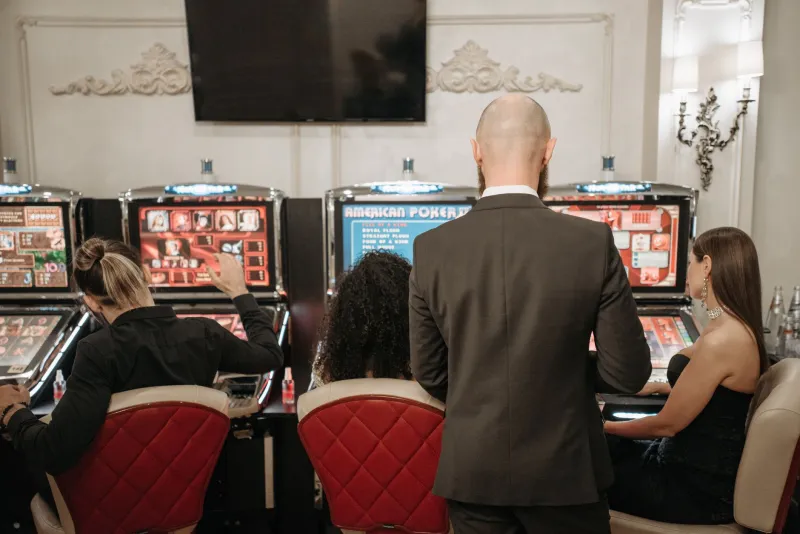
The Casino Playlist You Never Agreed To: How Sound Design Is Running Your Session
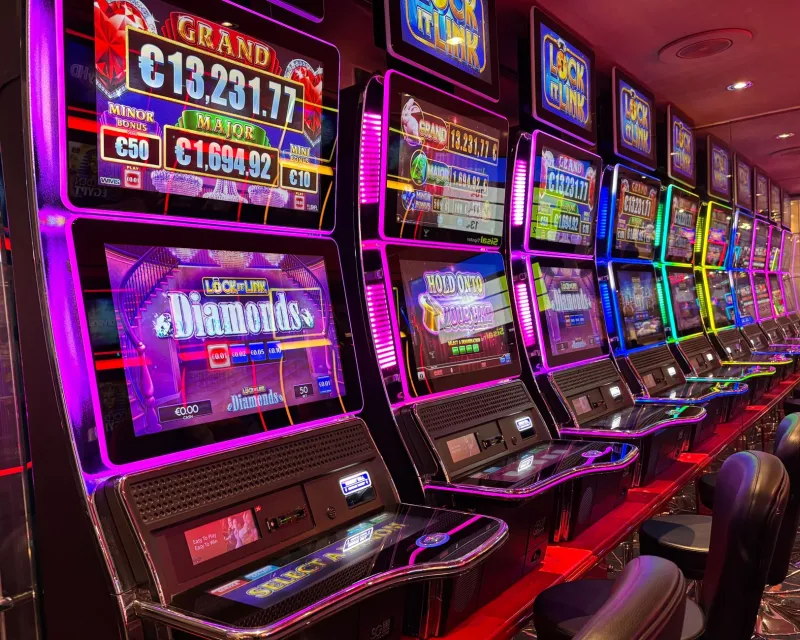
Close your eyes and picture a casino floor. What do you hear?
Coins cascading. Electronic chimes. A low, rhythmic hum of ambient noise. Somewhere in the distance, a burst of celebratory sound from a machine someone just won on. Maybe some soft, unrecognizable music underneath it all.
Now here's the uncomfortable question: who chose all of that? And why?
The answer isn't random, and it isn't accidental. Casino soundscapes are meticulously engineered by acoustics experts, behavioral psychologists, and game designers working in concert toward a single goal: keeping you on the floor, in the zone, and betting longer than you planned.
The Science Behind the Jingle
Researchers have been studying the relationship between sound and gambling behavior for decades. One of the most cited bodies of work comes from Dr. Mark Griffiths and colleagues in the UK, whose studies found that music tempo directly influenced the pace of play — faster music led to faster betting decisions, while slower tempos encouraged players to settle in and stay longer.
US casino operators have taken this research and run with it. The goal isn't to rush you through your session. It's to find the audio sweet spot that makes you feel comfortable enough to stay but stimulated enough to keep engaging.
That sweet spot tends to involve mid-tempo music (roughly 70-80 BPM), major key harmonics that register as pleasant and non-threatening, and a carefully calibrated ambient noise floor that's active enough to feel exciting but not so loud it creates stress.
Why Winning Sounds Louder Than Losing
Here's one of the most deliberately asymmetric tricks in casino audio design: wins are loud, losses are silent.
Every time a slot machine pays out — even a tiny, below-bet return — it fires off a cascade of sound. Bells, chimes, musical flourishes, sometimes even a brief celebratory jingle. But when the machine eats your bet and returns nothing? Silence. Maybe a brief spin-down sound, and then it resets.
This creates a profoundly distorted perception of how the session is actually going. Your brain is receiving constant positive audio feedback on wins and essentially no feedback on losses. Over the course of an hour, your subjective sense of how you're doing gets completely detached from the mathematical reality.
Researchers call this phenomenon losses disguised as wins (LDWs) — a related concept where even a payout smaller than your original bet triggers the win sound sequence. You lost money on that spin. But your ears just told you you won.
The Frequency Factor
Beyond tempo and volume, the actual frequency range of casino sounds is engineered for psychological effect. Slot machines are typically tuned to the key of C, with overtones in the range of 1-4 kHz — a frequency band that human hearing is particularly sensitive to. These tones cut through ambient noise easily and register as attention-grabbing without being unpleasant.
This isn't guesswork. Game developers like IGT and Scientific Games employ teams of audio engineers who A/B test sound packages the same way pharmaceutical companies test drug formulations. The sound that ships in the final product is the one that performed best in trials — which in this context means the one that led to the most extended play sessions.
The Ambient Music Long Game
While slot machines handle the foreground audio, the ambient music playing throughout the floor is doing a different kind of work. Its job isn't to excite you — it's to neutralize your escape instincts.
Have you ever noticed that casino background music rarely has a distinct beginning, middle, or end? It doesn't build to a climax or resolve into a natural stopping point. It just... continues. This is intentional. Music with clear structural endpoints gives your brain a cue to pause, reflect, and potentially decide to wrap up. Continuous, structureless ambient sound removes that cue entirely.
The genre choices matter too. Most casino floors lean toward familiar but not distracting music — classic rock, light pop, jazz standards. Nothing that demands active listening, but nothing so bland it disappears. The goal is to occupy just enough of your auditory attention that the silence of leaving feels slightly uncomfortable by comparison.
What Savvy Players Actually Do Differently
Knowing this is happening is genuinely useful, but awareness alone doesn't flip a switch. Here are some concrete ways to push back against casino audio engineering:
Bring your own audio. This is the most direct counter-measure available. Playing with earbuds and your own music or podcast completely disrupts the casino's carefully designed soundscape. You're no longer receiving the win-frequency cues, the ambient tempo, or the LDW signals in the way they were designed to land. Some players find this changes their session feel dramatically.
Take audio breaks. Step away from the floor periodically — outside, if possible, or at least to a quiet area like a restaurant or hotel lobby. The contrast between the casino soundscape and actual quiet can snap your perception back to baseline and give you a more accurate read on how your session is actually going.
Verbally track your session. Because audio cues are distorting your sense of wins and losses, compensate with a different sensory channel. Write down your balance every 30 minutes. Say it out loud if you have to. Get the real number in front of you in a format the casino's sound design can't touch.
Recognize the win sound for what it is. Every time you hear that celebratory jingle, pause for one second and ask: did I actually come out ahead on that spin? More often than you'd expect, the answer is no.
The House Has a Soundtrack. You Should Have a Strategy.
The casino experience is engineered from the carpet up — the lighting, the layout, the free drinks, and yes, every single sound you hear while you're on that floor. Audio design is just one layer of a comprehensive system built to extend your session and loosen your decision-making.
That doesn't mean you can't enjoy the experience. It means you should enjoy it with your eyes — and your ears — open. The house built the playlist. You don't have to dance to it.