Walk In With Your Eyes Open: How to Size Up an Unfamiliar Casino Before You Bet a Dime
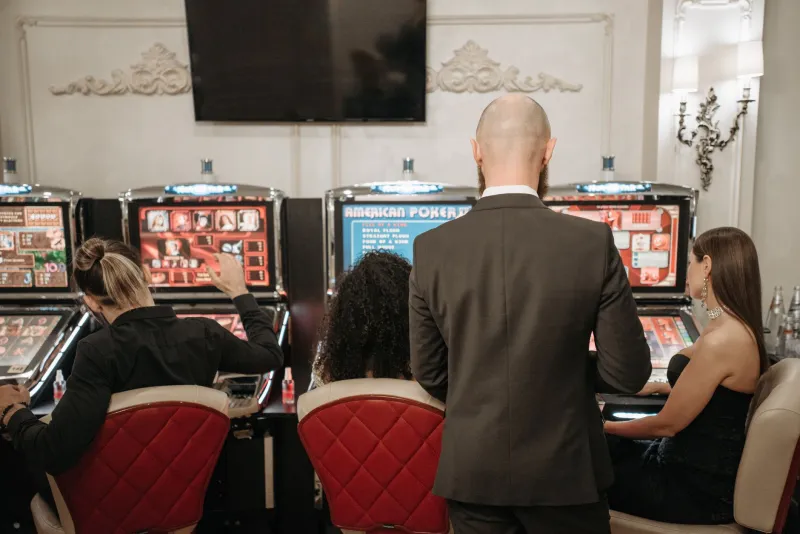
You're on a trip. Maybe it's Vegas, maybe it's a riverboat in Mississippi, maybe it's a tribal casino tucked off a highway exit you almost missed. Whatever brought you there, you're standing in a room full of flashing lights and the low hum of money changing hands — and you've got no idea whether this place is worth your time or your bankroll.
Here's the thing most casual players never think about: not all casinos play by the same rules. The difference between a tightly regulated, player-friendly operation and a house that's quietly bleeding you dry can be invisible to the untrained eye. But it doesn't have to be.
Before you sit down anywhere unfamiliar, run through this checklist. It takes maybe fifteen minutes and could save you a lot more than that.
Start With the License — Seriously, Look It Up
In the US, casino licensing is handled at the state level, and the standards vary wildly. Nevada and New Jersey have some of the most rigorous regulatory frameworks in the country. Other states are less stringent. And if you're traveling internationally or playing at a land-based operation in a jurisdiction you're not familiar with, the gap between "licensed" and "legitimately regulated" can be significant.
Legitimate casinos display their licensing information prominently — on the floor, at the cage, or on the back of their comp cards. If you're researching ahead of time, most state gaming commissions maintain public databases where you can verify a casino's standing. A quick search for "[state] gaming commission license lookup" will usually get you there.
If a casino is cagey about its regulatory body or you can't find any licensing information posted anywhere on the floor, that's your first red flag. Don't wave it off.
Check the Pay Tables Before You Touch a Machine
Slot machines and video poker games are required to display their pay tables — and those pay tables tell you a lot. On video poker, for example, a full-pay Jacks or Better machine returns 9 coins for a full house and 6 for a flush. That's the 9/6 version, and it's the benchmark for a fair game. Drop those numbers to 8/5 or 7/5 and the house edge climbs fast.
Savvy players always check these numbers before sitting down. If the machines on the floor are running lower pay tables across the board, the casino is quietly extracting more than it should. That's not illegal — but it's a signal about how this operation thinks about its customers.
Same principle applies to table games. Ask to see the posted rules before you buy in. Blackjack that pays 6:5 on a natural instead of 3:2 is one of the worst deals in the building. Any casino that defaults to 6:5 blackjack without making it obvious is counting on you not to notice.
Watch the Dealers Before You Sit
Spend five minutes watching a table before you join it. You're not just looking at the game — you're reading the dealer.
A well-trained dealer moves with consistency and precision. Chips are cut cleanly, cards are handled the same way every time, and the pace of the game is steady. Sloppy dealing — inconsistent shuffles, cards flashed accidentally, chips miscounted and corrected repeatedly — isn't necessarily sinister, but it does suggest a house that's cutting corners on training. That same attitude tends to extend to other areas of the operation.
What you're really watching for, though, is irregularity. A dealer who seems to be rushing certain parts of the game, or who handles the discard tray in unusual ways, or who doesn't follow standard procedure for card handling — these are things worth noticing. Most of the time there's a boring explanation. But in a casino you don't know, trust your instincts. If something feels off, move on.
Ask Questions at the Cage
The casino cage — where you exchange cash for chips and vice versa — is one of the most revealing spots in the building. How the staff there treats you tells you a lot about how the operation values its players.
Ask a simple question: "What's the minimum I need to play to qualify for a comp?" or "Can I see your current promotions?" A legitimate, player-friendly casino will answer clearly and point you toward their rewards program without hesitation. A place that's less interested in building relationships and more interested in extracting cash will either brush you off or give you a vague non-answer.
Also ask about cashout procedures. In a reputable casino, cashing out chips is straightforward. If there's a lot of paperwork for small amounts, unusual delays, or pressure to keep playing instead of cashing out, those are signals worth taking seriously.
Look at the Crowd — and the Exits
This one sounds strange, but experienced gamblers know it: the vibe of a casino floor reflects the character of the operation. A room full of regulars who seem comfortable and engaged is a different animal from a room where people look frustrated, confused, or like they're trying to figure out how to leave.
Also pay attention to how easy it is to find the exits, the ATMs, and the cashier. Casinos are famously designed to be disorienting — that's not a secret. But there's a difference between a layout that encourages you to explore and one that seems deliberately designed to make leaving feel difficult. If you can't find a clock anywhere, if the ATMs are clustered near the high-limit tables, if the exits are genuinely hard to locate — those design choices say something about priorities.
Trust the Basics, Verify the Rest
Here's the bottom line: most casinos in the US, especially those operating under serious state oversight, are playing it straight. The house edge is real, but the game itself is fair. Your job as a player isn't to assume the worst — it's to verify the basics before you commit.
Check the license. Read the pay tables. Watch the dealers. Ask a few questions at the cage. And if anything feels off — if the answers are evasive, the pay tables are stingy, or the floor just has a weird energy — trust that instinct and walk back out the door.
Your bankroll is your stake in this game. Protect it like it matters, because it does.
At Johnny Z's Casino, we're big believers in playing smart before playing hard. Knowing the room you're in isn't paranoia — it's the first move a serious player makes.