Riding High and Going Broke: How a Winning Streak Sets You Up for the Biggest Loss of the Night
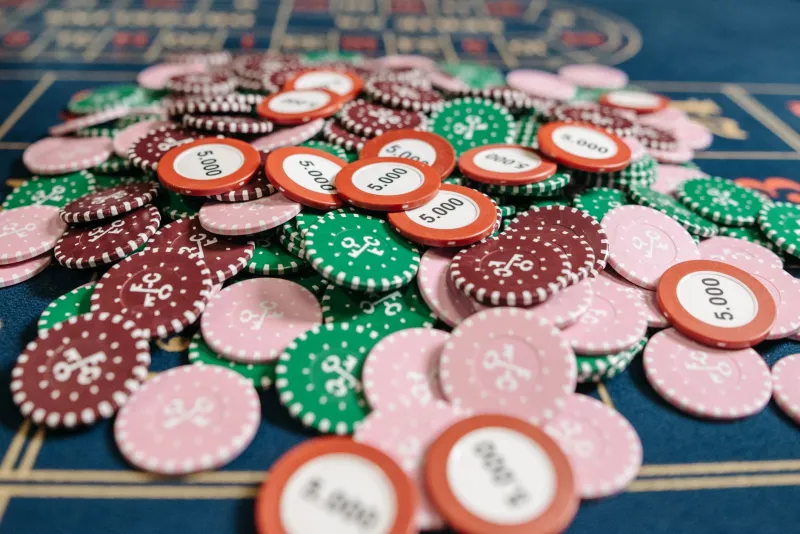
There's a moment every casino player knows. You're up. Maybe it's a few hundred bucks, maybe it's a lot more. The chips are stacked in front of you, the table feels electric, and somewhere in the back of your brain a voice whispers, keep going — you've figured this thing out.
That voice is lying to you. And it's costing players across the country real money, every single night.
Winning streaks aren't a sign that the tide has turned in your favor. They're a statistical blip dressed up in emotional clothing — and the moment you start believing the streak is you, rather than random variance doing what random variance does, you've already started losing. You just haven't seen it on the felt yet.
The Psychology Behind the Rush
Here's what's actually happening inside your head when you go on a run. Every win triggers a small dopamine release — the same neurochemical reward system that lights up when you nail a job interview or score tickets to a sold-out game. Stack a few wins together and that reward loop starts firing faster. Your confidence spikes. Your risk tolerance quietly expands.
Behavioral researchers call this the "hot hand fallacy" — the deeply human tendency to believe that recent success predicts future success, even in situations governed by independent random events. A roulette wheel doesn't remember where it landed last spin. A slot machine doesn't know you're on a roll. But your brain absolutely does, and it starts making decisions based on a pattern that doesn't exist.
The practical result? You bet bigger. You stay longer. You start making plays you'd never touch with a cold stack in front of you. And slowly, then suddenly, the chips go back the other way.
How Casinos Turn Your Momentum Against You
Casinos aren't passive observers when a player starts running hot. The entire environment is engineered to keep you in that seat through the emotional peak and out the other side.
Think about what happens when you're winning at a table. The energy is up. Other players are engaged. Maybe a cocktail server materializes out of nowhere. The sensory atmosphere of the casino — no clocks, no windows, constant ambient noise — is specifically designed to blur time and mute the internal signal that tells you to walk away.
More subtly, your own success becomes the bait. Casinos understand that a player sitting on a $400 profit feels invincible, and an invincible player bets like it. They'll chase a bigger number. They'll try a game they're less familiar with. They'll stay for "just one more hand" seventeen times in a row. The house doesn't need to cheat. It just needs you to stay long enough for the math to do its job.
The house edge doesn't care about your streak. It grinds away at every single bet, hot hand or cold, and over enough decisions it always collects.
The Overconfidence Spiral
Winning doesn't just make you feel good — it actively degrades the quality of your decisions. This is sometimes called "playing with house money" mentality, and it's one of the most expensive cognitive traps in gambling.
Once you're up, your brain starts treating winnings as found money rather than real money. That $300 profit? It doesn't feel like three hundred dollars. It feels like a cushion, a buffer, a reason to take shots you'd never take with cash from your wallet. So you start betting it recklessly, because losing it doesn't feel like losing — it feels like giving back something that wasn't really yours to begin with.
Except it was yours. The moment those chips landed in front of you, that was your money. And the willingness to surrender it because it came from the table rather than your bank account is one of the cleanest ways casinos recapture profits from players who should have walked out winners.
Concrete Exit Strategies That Actually Work
The players who consistently pocket their wins aren't lucky — they're disciplined. They decided before they sat down exactly how they were going to handle success, and they stuck to it. Here's what that looks like in practice:
Set a win limit before you play. This sounds simple because it is, but almost nobody does it. Decide in advance that if you hit a certain profit target — say, double your buy-in — you're done. Not "maybe done." Done. Write it down if you have to. The decision needs to be made when your head is clear, not when you're riding a rush and your judgment is compromised.
Lock up a percentage of every win. Some players use a "rack and move" rule: every time they hit a profit milestone, they physically separate a portion of their chips and don't touch them again. That stack goes in your pocket. It's off the table. This way, even if variance turns ugly, you're walking out with something.
Change your environment. If you're up big and you feel the pull to keep going, physically move. Walk to a different part of the casino. Get some water. Step outside for five minutes. Breaking the spatial and sensory loop you've been in can interrupt the momentum mindset and give your rational brain a chance to reassert itself.
Have a hard stop time. Separate from money, decide how long you're playing. When the clock hits, you go — whether you're up or down. Winning streaks don't last indefinitely, and playing past your planned session because things are going well is just giving variance more chances to even the score.
What Separates a Good Night From a Great Story
Here's the honest truth: most players who have ever gone on a real run can tell you about it in vivid detail. They can describe the table, the cards, the feeling. What they often can't tell you is how much they left with — because the streak continued until it didn't, and by then the profit was gone.
A winning streak is a gift. Treat it like one. The goal isn't to maximize the run — it's to convert momentum into money you actually take home. That's the difference between a great night and a great story about a great night that ended badly.
At Johnny Z's, we play to win. But winning means cashing out with more than you came in with. The table will be there tomorrow. Your profit doesn't have to be.